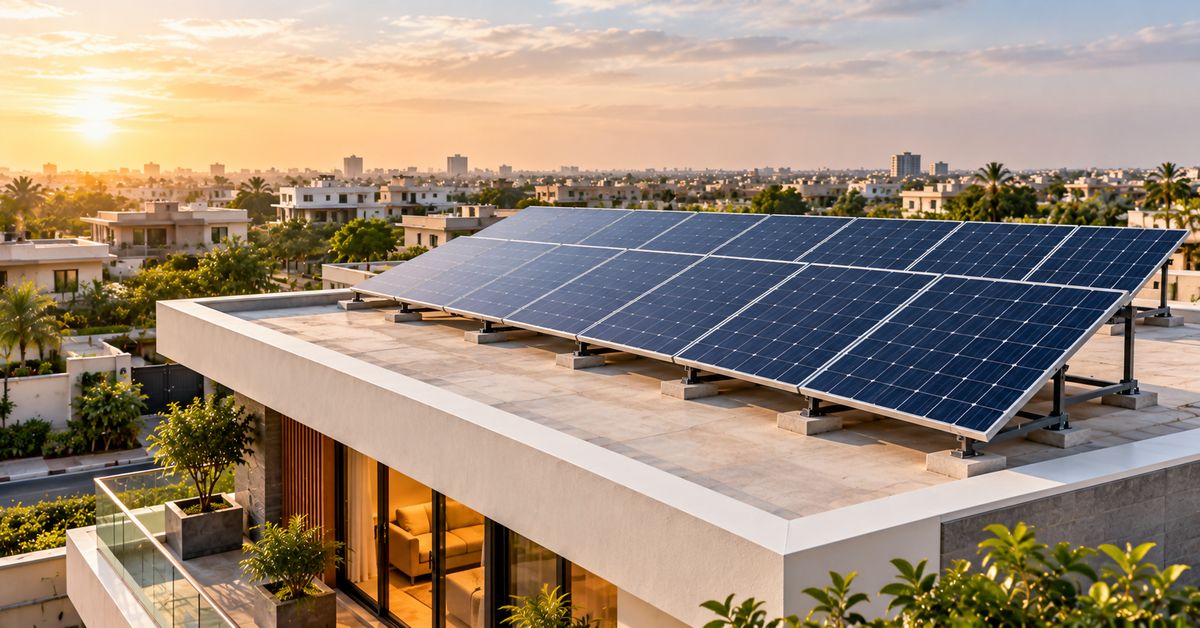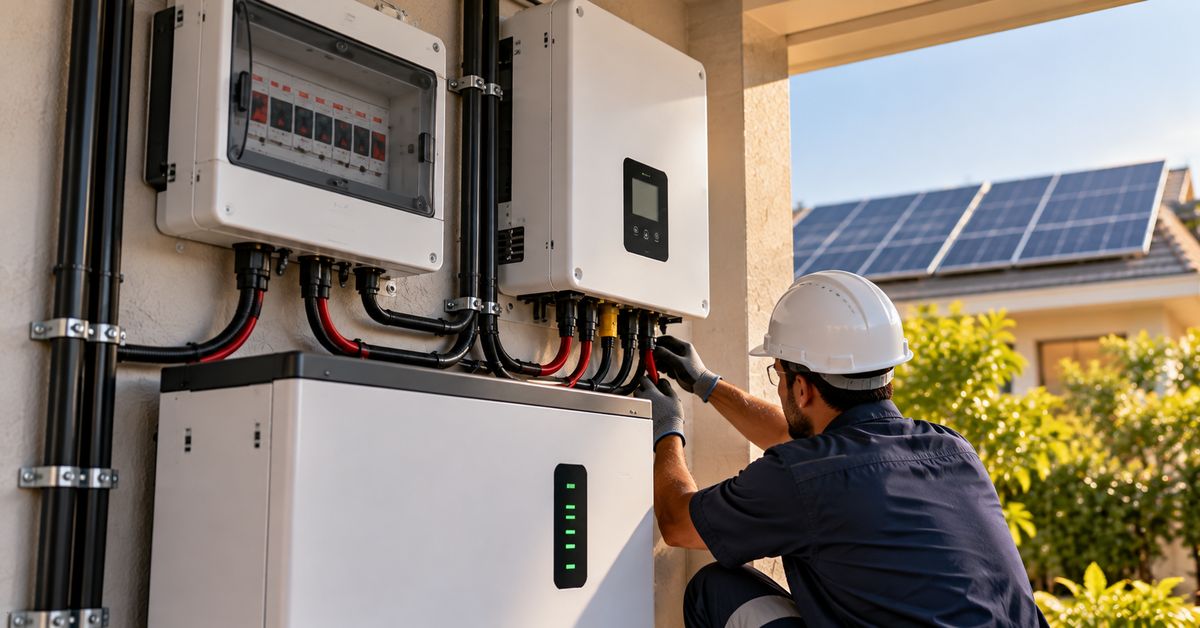
At a home in DHA Phase 6, Lahore, we installed nine bifacial solar panels, a 6kW hybrid inverter and lithium battery storage.
The panel array is rated at 5.805kW. The inverter is rated at 6kW. These figures describe different parts of the installation.
Project detail | Installed configuration |
|---|---|
Location | DHA Phase 6, Lahore |
Installation type | Residential hybrid solar |
Solar panels | Nine panels, rated at 645W each |
Combined panel rating | 5.805kW |
Hybrid inverter rating | 6kW |
Battery type | Lithium storage |
Our solar project gallery includes six photographs of this installation. They show the roof array, support frames, wall-mounted equipment, cable routes and battery display.
Nine Panels and the Actual Array Rating
The panel capacity comes from a straightforward calculation:
9 panels × 645W = 5,805W, or 5.805kW.
The 6kW project label matches the inverter rating used at this home. That description should be read alongside the panel specification.
A quotation showing only “6kW” leaves an important detail unanswered: how much solar panel capacity is actually included?
For this home, the answer is the nine-panel array above. Keeping both ratings in the project record makes the equipment easier to compare with another proposal.
It also avoids confusing a power rating with daily electricity generation. Installed capacity alone cannot establish how many units a roof will produce each day.
Low Roof Frames on Concrete Supports
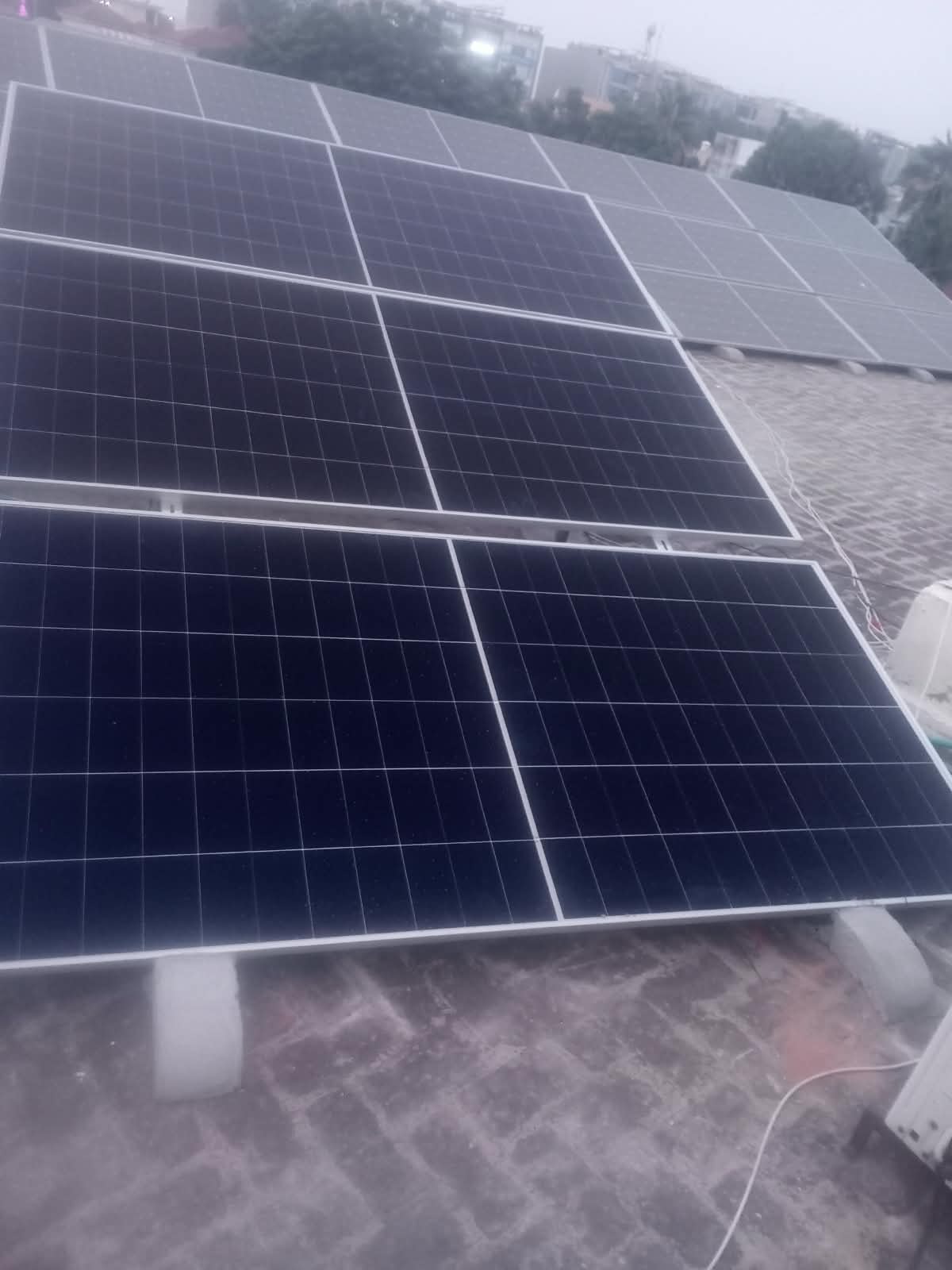
The rooftop photographs show panels held above the roof on low, tilted metal frames.
Rectangular concrete support blocks are visible beneath the structure. Gaps remain between panel groups, and roof space can be seen around the array.
The panels sit close to the roof on these supports. An open strip of roof remains beside the array near the boundary wall.
They also show nearby buildings, trees and the roof's boundary wall. Those surroundings matter when assessing shade and planning access.
For another home, the same panel count would still need a fresh layout. Roof dimensions, obstructions and structural requirements must be checked at that address.
Our site survey and design service covers that planning before equipment is selected.
Bifacial Panels in This Roof Layout
The project uses bifacial panels. Their rear surface can also receive reflected light, but any additional generation depends on the installation.
The DHA photographs show the panel faces and parts of the supporting arrangement. They do not provide a measured rear-side generation result.
For this reason, a bifacial label should be considered alongside the roof surface, mounting clearance and surrounding shade.
For a similar proposal, ask for a generation estimate using the actual mounting arrangement. Any expected rear-side contribution should have its assumptions stated separately in the proposal.
Cable Routing Beneath the Main Units
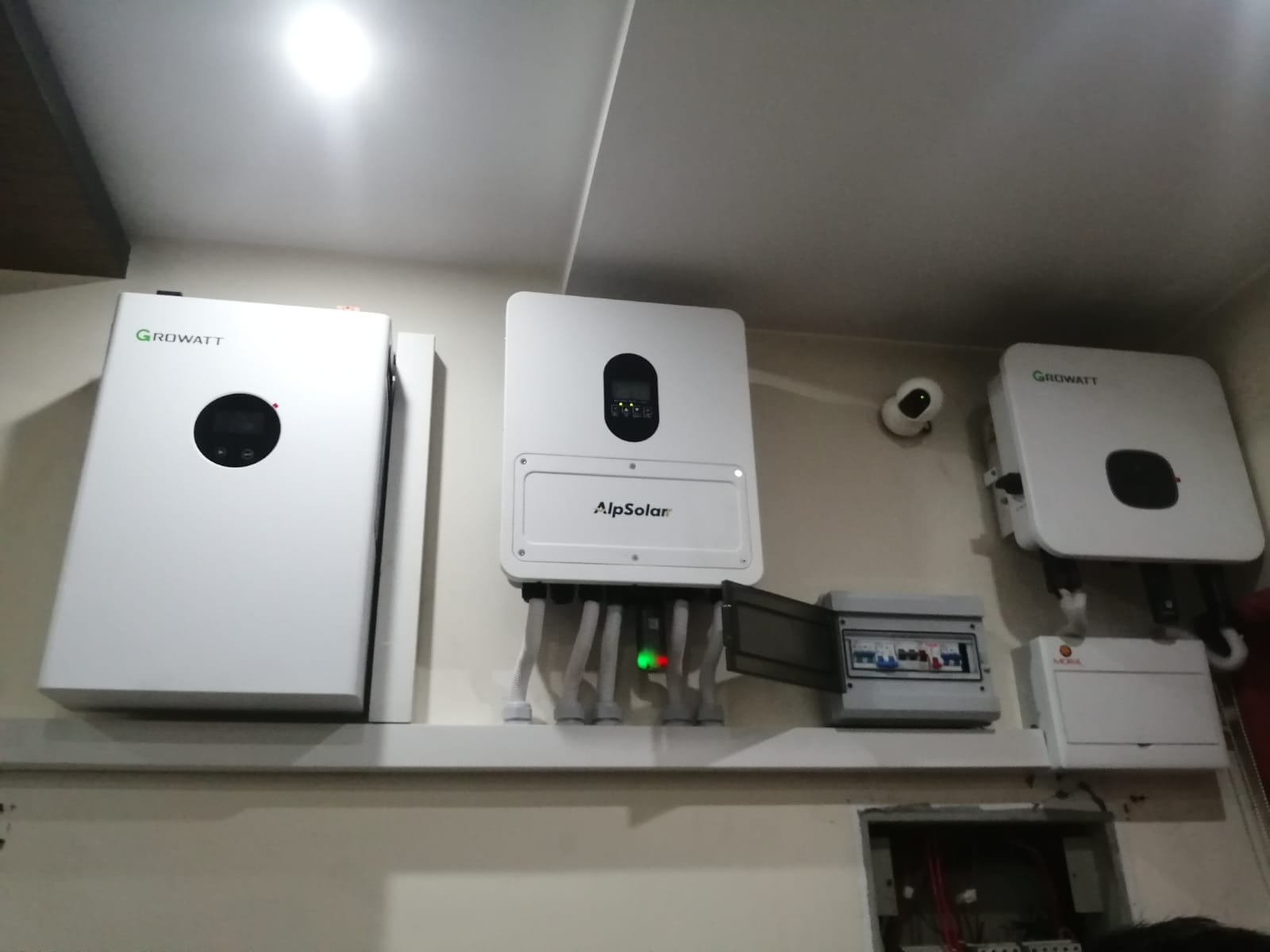
Several flexible conduits enter the underside of the hybrid inverter. These lead toward the covered horizontal cable route.
A vertical covered section is also visible beside the battery. Together, these details show how the main equipment connections were routed along the wall.
The photographs document the external arrangement. Cable sizes, circuit assignments and protection ratings belong in the electrical installation records.
For a comparable complete solar installation, those records should identify the wiring and protection equipment included in the work.
What the Battery Display Shows
The battery close-up captures a 76% charge reading.
That is a reading from the moment the photograph was taken. It is not the battery's storage capacity or a statement of backup duration.
The project confirms lithium storage alongside the hybrid inverter. To calculate backup hours, the battery's usable energy and connected appliance load must be known.
A 6kW inverter rating cannot supply that information.
For lithium battery backup, we assess the appliances requiring power, their demand and the hours of support needed.
That keeps the discussion tied to the equipment and loads rather than a fixed promise based on system size alone.
Reading Performance Beyond the Photographs
The project specification includes performance monitoring. The photographs also show an illuminated inverter display and equipment status lights.
Those images record the installed setup at particular moments. Daily generation, charging behaviour and nighttime use are better assessed through operating records.
For ongoing review, retain generation history, battery-charge trends and any system alerts. Compare them with the household's electricity use over the same period.
This separates three questions: what was installed, how much electricity it generated, and how the household used that electricity.
The hardware details in this case study answer the first question. Measured records are needed for the others.
A Specific Reference for a Similar Home
This DHA Phase 6 installation combines a 5.805kW panel array, a 6kW hybrid inverter and lithium storage.
Its photographs give a closer view of the roof supports, equipment wall and cable routing. Those details make it a useful reference when discussing a similar home.
Start with this project, then plan around your own property and electricity use. As household demand changes, operating records can help guide any later adjustment.
Contact Japston Energy with the DHA Phase 6 project name to discuss a comparable residential installation.
FAQs
Can the same nine-panel arrangement be used at my home?
It can be considered, but the layout must suit your roof. Panel dimensions, shade, access and mounting requirements need checking before confirming the same quantity.
Can I choose a different battery capacity?
Yes, subject to compatibility and design checks. Battery selection should follow your backup appliances, required hours, inverter support and charging requirements.
Does this configuration guarantee AC backup during a power cut?
No. AC operation depends on the backup circuits, inverter output, battery discharge limits and the appliance's demand. The inverter rating alone does not confirm whole-home backup.
Can more panels be added later?
That requires checking the inverter's permitted solar input, panel-string limits and available roof space. A 6kW label does not automatically confirm expansion capacity.
Can these concrete supports be copied on another roof?
The mounting arrangement needs assessment for each property. Roof condition, loading, fixing details and local exposure must be reviewed before selecting a similar structure.
View all six original installation photographs ↗