
Before paying a deposit, check that your solar installation quote names the panel model and quantity, inverter output, mounting work and cable allowance. It should also show taxes, the final payable amount, payment stages and separate warranty terms.
For battery backup, the quote should state usable battery capacity, supported circuits and the load used to estimate runtime. These details belong in the written offer before you accept it.
Equipment You Can Identify and Check
The equipment list should show each panel’s manufacturer, full model number, wattage and quantity. The inverter needs its own model, rated AC output, system type and phase details. Attach the equipment datasheets to the offer.
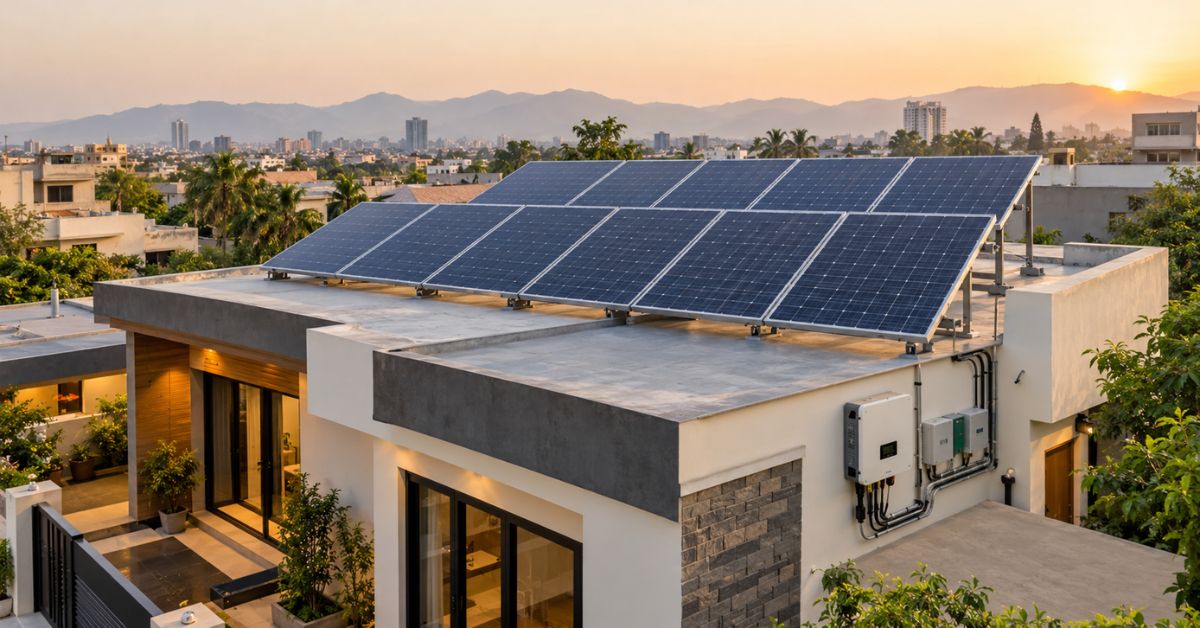
Panel capacity and inverter output are different figures. Our Wapda Town solar installation uses 18 panels rated at 645 watts each, paired with a 12kW three-phase hybrid inverter.
The panel calculation is 18 × 645 ÷ 1,000 = 11.61kWp. That is the array’s rated DC capacity. The inverter has a separate 12kW rating.
Your quotation should make this distinction equally clear. It should confirm that the panel arrangement suits the inverter’s input limits and your electricity connection.
Before installation, compare the delivered model labels with the accepted equipment list. Record serial numbers for the final invoice and warranty documents.
The Full Installed Price in Pakistani Rupees
The price breakdown should identify panels, inverter, batteries where included, mounting, electrical materials, labour, delivery and testing. Any discount should lead to a clear final payable total.
Check whether taxes are included. If an amount is an allowance rather than a fixed price, the document should explain what could change it.
Utility work needs separate treatment. Application assistance, meter-related work and applicable official charges should each be marked as included, excluded or payable separately. Check current requirements with your electricity distribution company.
For each excluded job, state who will arrange it and how it will be priced. This applies to roof repairs, replacement of existing wiring and work outside the agreed scope. Additional work should need your written approval before it starts.
Roof, Structure and Electrical Work
The installation price should be based on your roof and electrical setup. A solar site survey and design assessment helps establish panel positions, shading, equipment locations and cable routes.
These details make the scope easier to check:
Quoted work | Details to put in writing |
|---|---|
Mounting structure | Material, height, fixing method and included civil work |
Roof fixing | Responsibility for sealing penetrations and repairing installation damage |
Cabling | Type, size, included lengths and extra per-metre charges |
Electrical board | Required changes, who performs them and who pays |
Protection and earthing | Included equipment, earthing work and electrical testing |
The design should also leave access for cleaning and inspection. Cable sizes and protection ratings must suit that design; they cannot be selected from system capacity alone.
If the quotation is provisional pending a visit, it should say when the final scope and price will be issued.

Battery Specifications and Backup Circuits
For lithium battery backup, the equipment schedule needs the exact model, quantity, voltage, nominal storage and usable storage. Capacity should be stated in kilowatt-hours (kWh).
Also check continuous discharge power and any short-duration peak limit. These figures help establish which appliances can operate together.
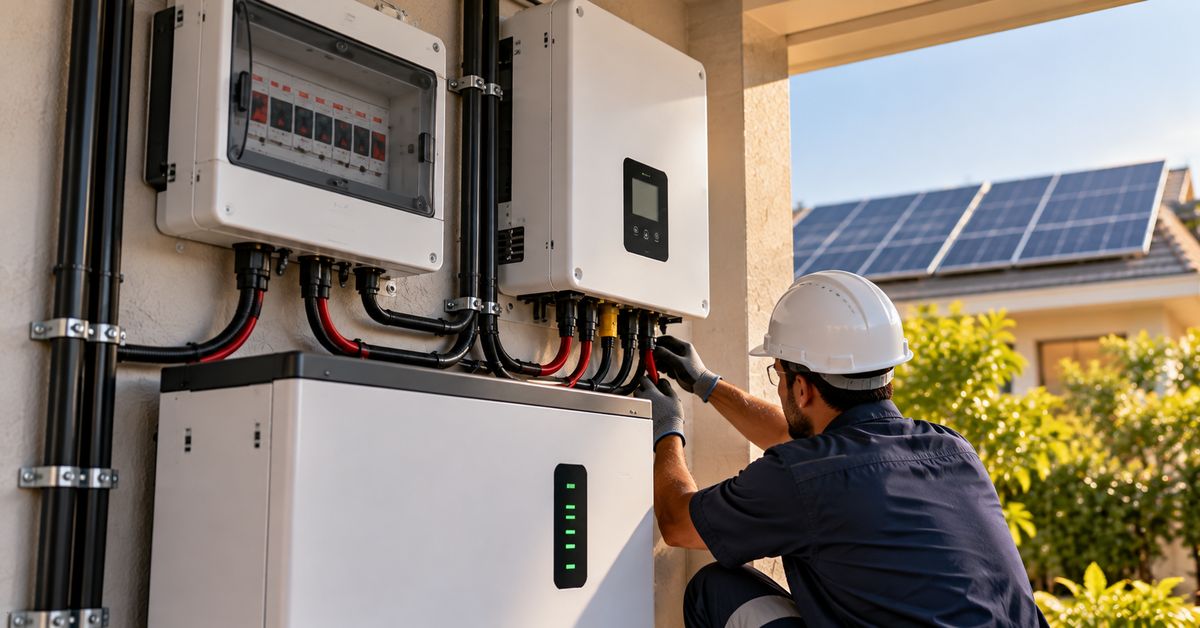
The price should cover compatible inverter connections, battery protection, cables, mounting accessories and settings.
The backup scope must name the supported circuits. On a three-phase property, it should explain which phases receive backup.
Any promised runtime needs stated conditions: connected load, starting charge, battery reserve and conversion losses. A number of backup hours without these conditions is difficult to assess.
Generation and Savings Estimates You Can Assess
Expected generation should be shown in kWh per month or year. The forecast needs to reflect your location, panel direction, tilt, shading and system losses.
If the quotation includes savings or payback, check the assumptions behind those figures. They should identify your expected daytime use, electricity prices and any assumed export arrangement.
Generating electricity and reducing your bill are related, but they are different calculations. Fixed charges and electricity bought after sunset can remain.
Any generation guarantee should have written conditions and explain how performance would be assessed.
Separate Warranties and Local Claim Support
The warranty schedule should distinguish panel product cover, panel power-output cover, inverter cover, battery cover and installation workmanship.
Panel output cover concerns performance under its terms. It does not automatically cover the inverter, battery or installation labour.
Each warranty needs a duration, start date, exclusions and claim contact. For battery cover, check limits on years, cycles and total energy delivered. Look for any minimum remaining capacity guarantee.
Find out who handles the claim in Pakistan and who pays for inspection, removal, transport and reinstallation.
After-sales support also needs a defined scope. Check which visits are included, whether monitoring is offered and what later maintenance costs separately.
Payment Stages, Dates and Equipment Changes
Your quote should identify the supplier, installation address, quotation number, issue date and expiry date. It should also state equipment availability and the expected installation schedule.
Payments need clear milestones. Define what counts as delivery, completed installation and accepted handover before linking amounts to those stages.
Deposit, cancellation and refund terms belong in the agreement. So do the arrangements for weather delays, unavailable stock and unexpected site work.
Equipment substitutions should require written approval. The revised offer should identify the replacement model, warranty, compatibility and any price change.
Where utility approval is involved, keep installation dates separate from the connection timeline.
Testing and Handover Before Final Acceptance
The agreed completion checks should cover electrical connections, protection, inverter operation and battery operation where included. Request a written commissioning record showing the checks completed.
For purchased outage backup, the installer should demonstrate the agreed backup circuits.
Handover should include equipment details, serial numbers, invoices, warranty papers, manuals and relevant system drawings. You should also receive operating and shutdown instructions.
If monitoring is included, check that you can log in and view the system. Clarify whether it shows generation only or also household consumption and grid use.
Agree on how outstanding work will be recorded and resolved before final acceptance.
Put the Agreement on Paper Before Installation
A solar quote should let you check the delivered equipment, follow the agreed work and understand the final cost. Resolve unclear allowances, backup promises and warranty responsibilities before paying.
For Japston Energy’s complete solar installation service, share your bills, city, roof details and backup priorities. Request a written scope for your property. If you expect to add panels or storage later, establish those limits now so future work can be planned around the installed system.
FAQs
Is a quote sent as a message enough?
The format matters less than the detail. Get the equipment schedule, price, scope and terms together in one dated document before accepting.
Can I get a quote before a site visit?
Yes. Check whether it is a fixed quote or a provisional estimate, and what still needs inspection. Any conditions allowing price changes should be clear.
How should I compare two different totals?
First match panel capacity, inverter model, battery storage and installation scope. Then compare exclusions, warranties and payment terms. Price per watt alone leaves out these differences.
What if the equipment changes after I pay?
Refer to the agreed substitution and cancellation terms. Request a written replacement proposal before approving different equipment.
Should future expansion appear in the quote?
Yes, if planned. Specify the intended addition and ask what the quoted inverter, roof layout and electrical design can accommodate.